Negotiating Bottlenecks
Remedies for Extinction Risks
Change in earth's atmosphere
This discussion arises from the Great Oxygenation Event 2.4 to 2 billion years ago. Oxygen is a very active chemical, and was a poison to much life.
There is no prospect of repeating the Great Oxygenation Event; but other, equally potent changes of a similar nature should be considered.
Our continued use of fossil fuels could trigger a number of tipping points, leading to alterations in the composition of our atmosphere. If the oxygen is temporarily lowered and the carbon dioxide temporarily raised, the dominant organisms best adapted to that change may supplant the current ones. The new organisms, such as new varieties of plankton, may lock in the changed state.
The driver for this atmospheric forcing is human activity. This extinction threat arises from humans; and the remedy is clear.
Extinction itself has no remedy. But with foresight, prevention is possible.
Volcanic activity
The eruptions which caused the End-Permian extinctions were massive. Such events and their regions are often referred to as Large Igneous Provinces. The huge quantities of lava deposited are called Flood Basalts. These are no ordinary volcanos. They arise because of plate tectonics, or sometimes because of a volcanic plume.
They are not frequent. But they have not ceased, and similar scale eruptions are possible again.
There is no known technology that could stop or prevent such a huge event. But we could exert some control. If we draw heat out of the surrounding and overlying rock, it makes a stronger, heavier, and more stable barrier. We can generate geothermal electricity at the same time. In some cases the rate of heat transfer which we can engineer would be very helpful.
We may not succeed fully, but we have a good chance of moderating one of the wildest forces of nature.
Impact from space
Detection of threatening asteroids is developing rapidly. Anything up to 100 kilometres in diameter can probably be deflected before impact.
We may not have the ability to manage much larger bodies.
We should continue preparing to deflect asteroids and comets; and in the long term enlarge the sizes we could manage. In case of impact, we should also have global food stocks distributed in advance to help us survive an impact winter.
Ocean anoxia
In the past ocean anoxia has had many causes, such as nutrient influx leading to growth of blooms, which deplete the water of oxygen. Sometimes those blooms were caused by eruptions, sometimes by changes in land or climate arising from plate tectonics. High temperatures and high carbon dioxide levels contribute to anoxia. Ocean current patterns may leave deeper layers to stagnate and lose oxygen. A change of current can lead to overturning of toxic water, killing all the life in shallower water.
These days we can control human emissions and what flows into the oceans.
We can attempt to manage magma chambers and volcanic plumes, which may cause ocean anoxia. Because our control of such things is uncertain and limited, we should allow a margin. Otherwise the work of nature may build upon the mischief of humans and tip us off balance.
War
A sane community in self control would effectively manage tensions in less destructive and risky ways.
Climate
We humans are causing this risk. But we also have the potential for restraint and insight. Certainly we can live within planetary boundaries.
Pandemic
New diseases and disease variants arise partly because of our actions: greater contact with wild species, disruption of wild environments, frequent travel and group gatherings, and global warming.
Stupid human decisions amplified by complex technologies
Says it all: the humans are making those decisions. They could consider more deeply. Perhaps they will.
Supernovae and Gamma-Ray Bursts
These have some things in common: they are powerful astronomical events, and their occurrence is outside human control. There are some protective measures, but generally I do not think they are very effective.
We may have plenty of warning of a star about to become a supernova.
There is no warning likely for a gamma-ray burst, but gamma-ray bursts are rare, and we will probably not see one in our galaxy for millions of years. When one does arise nearby, our risk depends whether one of the two radiation beams is oriented to point towards us.
The earth and it's inhabitants can cope with some effects of these events, for example ozone layer damage and greater ultraviolet light, or a period of acid rain.
With sufficient proximity, or when radiation is pointed in our direction, we would suffer extinctions, and in severe cases our atmosphere would be ablated, making earth uninhabitable for many types of organism.
Aliens
A variety of methods are underway to try to detect extra-terrestrial life. SETI programmes listen for radio signals of artificial origin. We are just beginning to analyse the atmospheres of exo-planets for biomarkers. And probes are starting to examine material from planets and moons within our own solar system.
I commend all that work.
But I object to sending signals. We are too young to know the risks. Predation has not evolved away from technologically advanced life on our own planet. There is no evidence that it must dwindle to lie within rational control on other planets (or life platforms). In the absence of such evidence, sending signals might be as risky as teasing a tiger.
We can't hide our atmospheric composition. And we can't call back radar and television signals already emanating. But it would be prudent to refrain from deliberately generated and targeted high-power signals.
Mirror life
As far as we can tell, mirror life has not evolved naturally; and if it did then it appears to have vanished. Any creation of mirror life is entirely up to humans, and the avoidance of this risk is a human decision.
Magnetic field decay
A lowered field may happen as part of a magnetic pole excursion (wander) or reversal. We do not have any known influence over the interior of the earth where the magnetic field is generated. Maintaining the health of the planet may help us withstand the effects of a reduced field. For example, having a broad variety of species will help survival of increased ultraviolet radiation.
Would it help to build colonies on the Moon, Mars, or elsewhere?
The earth may become uninhabitable for various reasons. And in the longer future, we could gain some protection by establishing independent colonies on the moon, Mars, space habitats, or elsewhere.
You learn partly by doing, and it is so exciting to build something on the moon or Mars. But in this case I think it is premature to establish colonies off the earth. An independent colony is decades away.
Paradoxically, I think we will more quickly establish independent colonies by first focussing on some of our more serious problems here, like feeding everyone. It is social division and lack of sensitive coordination that hold us back. True collaboration requires a more equitable arrangement, and local problems are the projects where we can best develop those societal skills. Indeed you do learn by doing, and the thing we most need to learn is respect for other parts of our society.
Research is warranted into how to best protect earth. Most of that research should take the form of making more resilient communities generally. We can't escape our nature; we can build a better nature.
I further consider it to be not warranted to make underground shelters. We should instead be preserving seeds in reliable vaults.
Biodiversity loss
A change in the environment, such as a warming climate, can affect multiple species. And each adjustment leads to another. In ecosystems, species are inter-dependant.
This cause of extinction is a little different from the others, and one complication of using biodiversity as a distinct cause is that it is not fully independent; not fully distinct. Including related terms risks counting things twice. For most causes I have chosen the physical changes as the ultimate causes for life to flourish, or to founder. Biodiversity is much more complex. Nevertheless, because of its importance, I have decided to use biodiversity as a fundamental label. Other life constitutes an important part of the environment of any organism. While not completely independent, living interactions introduce complex extensions of any more fundamental physical cause.
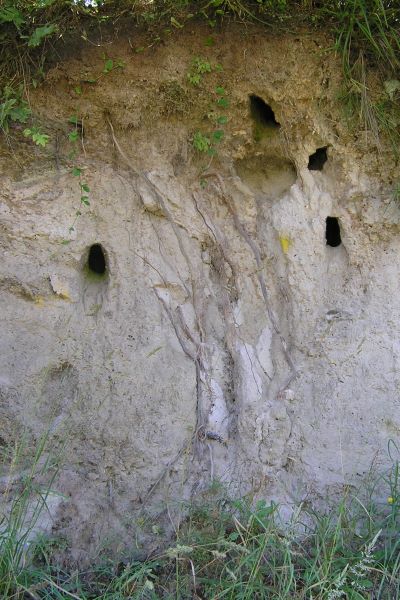
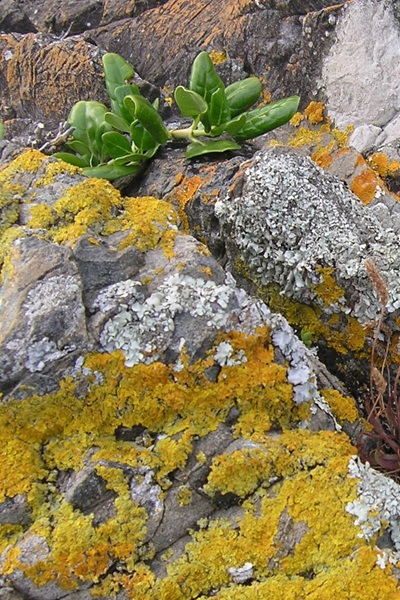
Today, extinctions are sharply increased. Humans are driving those increased extinction rates. And humans could reform, becoming a guardian species, instead of persisting as the greatest destructive agent on the planet.
It would be of great benefit to us and countless other inhabitants of the planet if we refrained from ecocide. Treat other life as companions. Live within respectful limits.
|
  |
 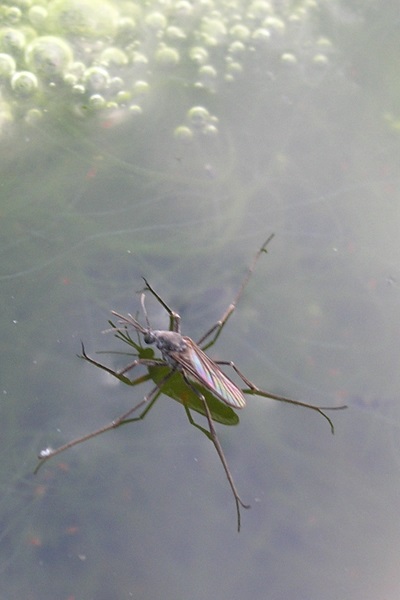 |
| some of our companions |
Extinction risks and the extent of human control
| Risk | Human control |
| Atmospheric composition alteration | Considerable human control |
| Volcanic eruptions | Partial control |
| Impact from space | Good, growing, can never be complete |
| Ocean anoxia | Considerable human control |
| War | Full |
| Climate change | Almost full |
| Pandemic | Considerable human control |
| Stupid human decisions amplified by complex technologies | Full |
| Supernova and gamma-ray bursts | Little human control |
| Alien attack | Full control over intentionally sending signals |
| Mirror life | Full human control |
| Magnetic field decay | Little human control |
| Biodiversity loss | Considerable human control |
|
What I have labelled full control needs further discussion. If you have driven your car at full speed over a cliff edge, you don't have full control to avoid a harsh landing. But you did have control over embarking on the trip.
We have adequate control of many of the most serious risks; within reach are splendid opportunities. As you anticipate, there is a not-so-simple condition: provided we act with the maturity many humans are capable of.
Humans have the ability to manage most extinction risk faced by life planet-wide, including our own. But currently we are making feeble gestures towards adequate remedies. We have the ability, which will take effect if we take that control.
|
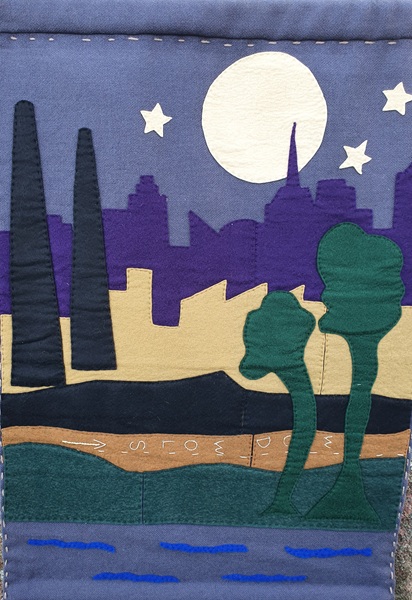 |
| slow down exhortation |
| Previous: Causes |
You are on the |
Human Remedies page |
Next: Priorities |
| accessible through |
Extinctions Index |